

History of the Department
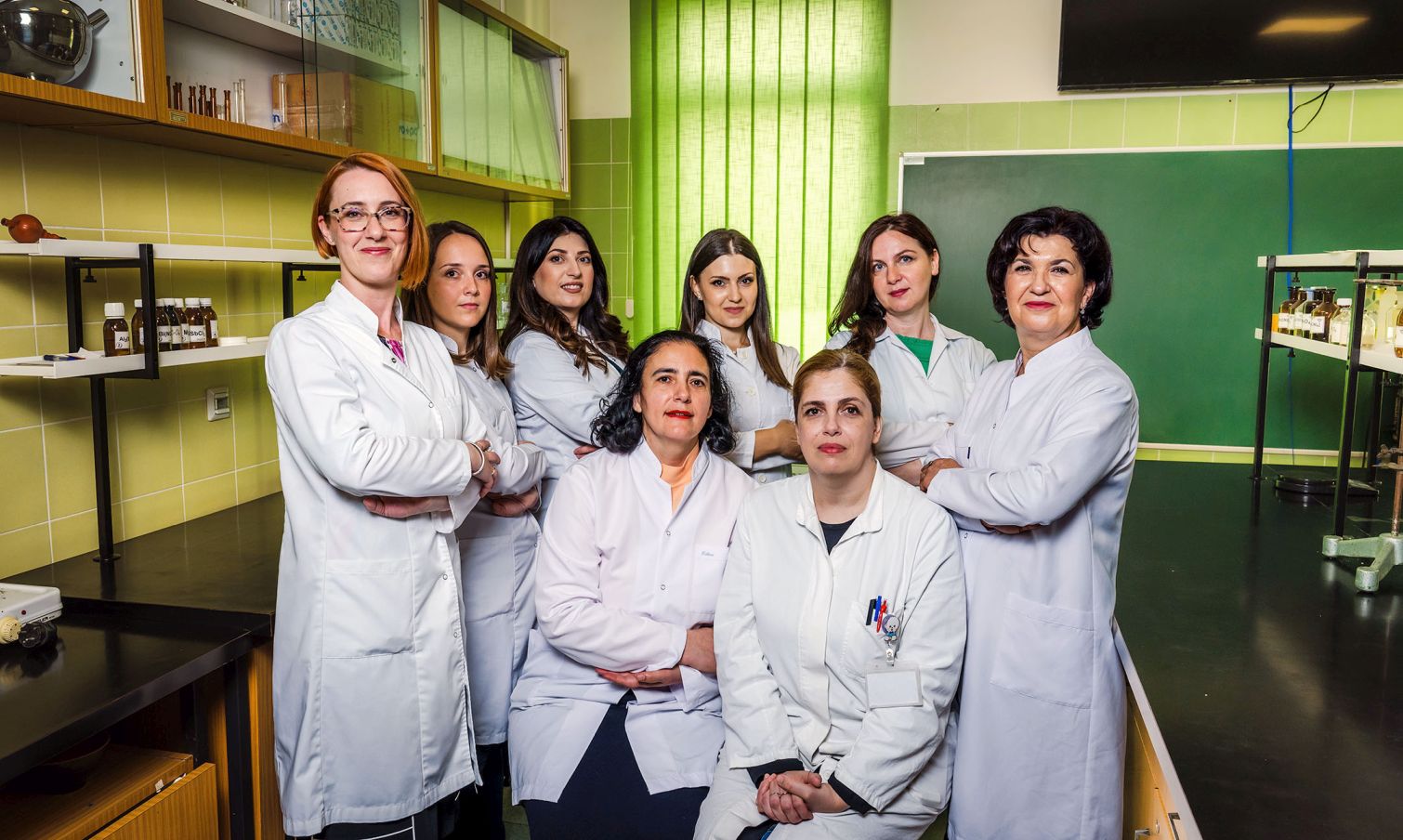 The Department was established at the Faculty of Pharmacy in the 1975/76 academic year when, due to a shortage of teaching staff, classes were delivered by professors from the Faculty of Pharmacy at the University of Zagreb. During that period, lectures were held in the course Pharmaceutical Technology, which was studied as a single course over two semesters in the fourth year of study. The course included theoretical, practical, and controlled instruction, as well as a final oral examination. Internship took place partly on the premises of the ‘Koševo’ pharmacy, while the industrial part of internship was organized at ‘Bosnalijek’.
Starting from the 1978/79 academic year, due to the deteriorating health of the previous instructor, Full Professor Ivan Štivić, the teaching responsibilities for the Department of Pharmaceutical Technology were taken over by the Department of Pharmaceutical Technology at the Faculty of Pharmacy, University of Belgrade.
Starting from the 1981/82 academic year, Assistant Professor. Sabira Hadžović assumed responsibility for the Department and the entire curriculum related to the subject of Pharmaceutical Technology. She had previously headed the industrial part of internship and remained in the position of department head until her retirement in 2001.
Thanks to the adoption of an innovative curriculum in 1991, the study program at the Faculty of Pharmacy extended to five years and concluded with a master’s thesis. This change in the curriculum led to the study of two courses within the Department of Pharmaceutical Technology. The former two-semester course Pharmaceutical Technology was then split into Pharmaceutical Technology I and Pharmaceutical Technology II, which are studied in the fourth and fifth years of study.
After the adoption of a new curriculum in 1998, the course Pharmaceutical Technology I was renamed to Drug Formulation, while Pharmaceutical Technology II became Industrial Pharmacy.
Subsequently, due to the implementation of the Bologna-based system of education at the University of Sarajevo, an updated curriculum was adopted in the 2009/2010 academic year. All courses taught within the department became one-semester courses, and elective ones were introduced. Compulsory courses include Drug Formulation I in the seventh semester, Drug Formulation II and Industrial Pharmacy I in the eighth semester, and Industrial Pharmacy II in the ninth semester. Elective courses within the department cover topics such as Selected Topics in Drug Formulation – Cosmetology in the eighth semester and Selected Topics in Industrial Pharmacy – Stability in the ninth semester. Additionally, starting from the 2015/2016 academic year, the course Selected Topics in Drug Formulation – Certification Standards in Pharmacy is also offered.
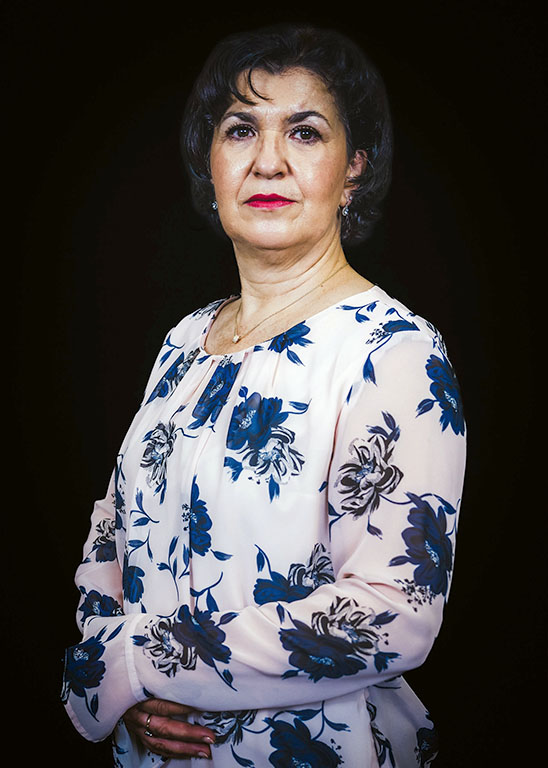
Teaching and professional staff currently involved in the teaching process
 |
 |
 |
 |
|
Edina Vranić |
Jasmina Hadžiabdić |
Ognjenka Rahić |
Alisa Elezović |
 |
 |
 |
|
Lamija Hindija |
Merima Šahinović |
Amina Tucak-Smajić |
Teaching activities
The Department of Pharmaceutical Technology at the University of Sarajevo – Faculty of Pharmacy is responsible for the development and delivery of the following courses within the scientific area of Pharmaceutical Technology: Drug Formulation I, Drug Formulation II, Selected Topics in Drug Formulation – Cosmetology, Selected Topics in Drug Formulation – Certification Standards in Pharmacy, Industrial Pharmacy I, Industrial Pharmacy II, and Selected Topics in Industrial Pharmacy – Drug Stability.
Thanks to the precise objectives of these courses, students become able to understand the methodology and are trained in formulating, manufacturing, evaluating, proper administration methods, and sampling techniques for standard and contemporary pharmaceutical forms, cosmetics, and extractive preparations, both in laboratory and industrial settings. This provides a foundation for original idea development and further advancement. Students become able to recognize and apply legal guidelines and good practices in the development, production, and testing of drugs on an industrial scale, as well as relevant stability testing guidelines. This enables the comparison and selection of appropriate pharmaceutical-technological operations in production, prediction of potential issues, and proposing solutions during the production process. The knowledge acquired in this way prepares students to work on the development, formulation, pre-formulation, and characterization of pharmaceutical forms, as well as assessing their stability (shelf life, packaging methods, and storage conditions) and bio-pharmaceutical characterization.
In addition to being involved in undergraduate education, the Department of Pharmaceutical Technology also offers courses within the framework of the third cycle of studies, starting from its establishment in 2014. The courses cover the following subjects in the scientific area of Pharmaceutical Technology: Preformulation studies and development of pharmaceutical forms, Selected chapters in physical pharmacy, Contemporary pharmaceutical forms, and Selected chapters in cosmetology.
The learning outcomes of these courses include mastering the methodology and principles of preformulation studies and pharmaceutical form development, improving the solubility of poorly soluble substances, and creating contemporary pharmaceutical forms. Students gain the ability to independently analyze, define, and solve problems relevant to preformulation studies and pharmaceutical form development, including enhancing the solubility of poorly soluble substances, modern pharmaceutical forms, and cosmetic products. Additionally, they acquire the skills to address specific issues using scientific methods and procedures, as well as the technology for manufacturing various cosmetic products and dermocosmetic preparations
The lifelong learning program „Formulab: formulation of skin care products“ was created and launched by Associate Professor Alisa Elezović in 2019, and it is intended for highly educated professionals, primarily masters of pharmacy. The aim is to strengthen domestic capacities in the field of developing new formulations of cosmetic preparations, as well as their production and marketing, both nationally and internationally. With regard to this overarching goal, the specific goals of the program are to train participants with a practical approach to knowledge of the materials and technologies for the production of skin care cosmetics, the possibilities of creating new cosmetic products, the basic quality requirements before placing the product on the market, and the involvement of formulators in product marketing.
In addition to educational activities, the Department of Pharmaceutical Technology is engaged in scientific, health-related, and professional activities. The department organizes specialized studies in pharmaceutical technology, which are required by the healthcare system.
Academic and professional activities
The academic and professional activities of the Department of Pharmaceutical Technology are focused on the development and characterization of modern drug dosage forms, both immediate-release and controlled-release formulations. The main research areas include:
- preformulation studies of active substances (DSC, TGA, HSM, compatibility studies, rheological testing);
- methods for improving the solubility of poorly soluble substances (complexation, solid dispersions);
- formulation studies and development of solid dosage forms (tablets, pellets, capsules);
- formulation studies and development of dosage forms with controlled and pulsatile drug release;
- formulation studies and development of liquid and semi-solid pharmaceutical forms (suspensions, emulsions, microemulsions, microclysters, medicated nail lacquers) and cosmetic preparations;
- development of methods for preformulation and formulation testing of active and auxiliary substances, intermediates, and finished products (permeation testing through natural and artificial membranes, methods for determining drug release from medicinal forms);
- in vitro testing of solid, semi-solid, and liquid dosage forms;
- nanostructured materials
.