

History of the Department
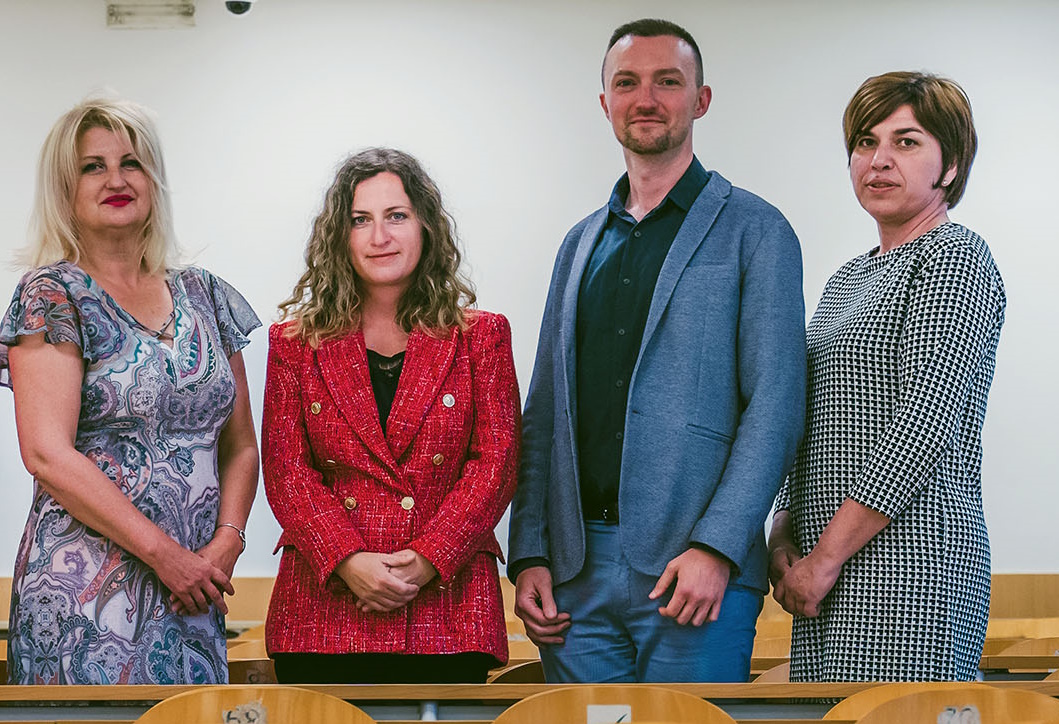 The Department of Pharmaceutical Chemistry was established at the Faculty of Pharmacy in 1975/76, and the first professor was professor Blanka Bobarević, a full professor at the Faculty of Medicine in Sarajevo. Due to the justified absence of professor Blanka Bobarević, the lecture to the first generation of students of the Faculty of Pharmacy was held by professor Zorka Blagojević, a full professor from Belgrade. The first teaching assistants at the Department were MPharm Emira Burunčević-Bilalović (from 1976 to 2003) and MPharm Fina Albahari-Lovren (from 1989 to 1992).
Emira Bilalović, M.Sc., was the head of the Laboratory for Isolation and Derivatization of Anabolic Steroids at the XIV Winter Olympics in Sarajevo, so as part of the preparations for the accreditation of the laboratory for doping control at the XIV Winter Olympics, she attended training in Cologne, Belgrade and Vienna in the period 1982–1983.
After the retirement of professor Blanka Bobarević in 1987, assistant professor Sote Vladimirov from Belgrade was hired as a teacher. The head of the Department in the period 1989–1992 was assistant professor Fina Albahari. During the period of war from 1993 to 1996, classes were delivered by Meliha Lekić, assistant professor at the Faculty of Medicine in Sarajevo. In the period 1996–2002, professor Marica Medić-Šarić, associate professor of Pharmaceutical Chemistry, University of Zagreb was a visiting professor at the Department,. In 1997, the Department hired another teaching assistant, Samija Muratović, Mpharm. In these turbulent times, in 2002, a new assistant professor was elected, professor Davorka Završnik. In the following years, the Department employed three more teaching assistants: in 2003, Selma Špirtović, MPharm, in 2007, Elma Veljović, MPharm. and in 2012, Amar Osmanović, MPharm. In the period 2009–2012, teachers and teaching assistants of the Department participated in a large international project, which included Switzerland, Croatia and Bosnia and Herzegovina participated (Development of Acyclic Pyrimidine Analogues as PET – Tracer for Monitoring Gene Therapy. SCOPES Project 2009–2012). The leader of this project for B&H was professor Davorka Završnik. From this project, for the first time since 1995, the Department received significant financial resources for the purchase of equipment and chemicals. From 2019 to 2021, the head of the Department was professor Samija Muratović. In the period from 2021 until today, the position is held by professor Selma Špirtović-Halilović. Today, the Department has two full professors, one associate professor, one assistant professor and one laboratory technician. At the time of writing this monograph, two research projects are in progress, while the results of the application for another one are awaited.
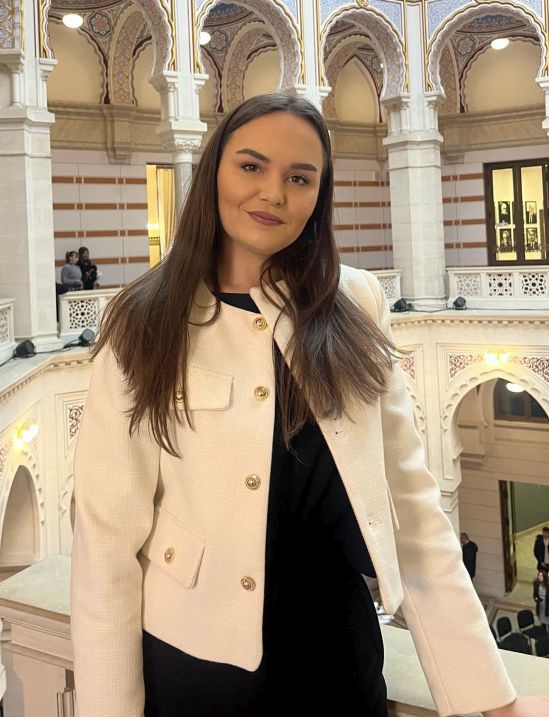
Teaching and professional staff currently involved in the teaching process
 |
 |
 |
|
Samija Muratović |
Selma Špirtović-Halilović |
Elma Veljović |
 |
 |
 |
|
Amar Osmanović |
Emina Bečić |
Kenan Hodžić
|
Teaching activities
At the time of writing this monograph, two curricula for undergraduate program are in force: the 2015 curriculum and the 2022 curriculum. As part of the curriculum of 2015 (passive curriculum), when it comes to undergraduate program, Pharmaceutical Chemistry I and Pharmaceutical Chemistry II are compulsory courses in the third year. Within the framework of this curriculum, the department also offers students three elective courses at the undergraduate level:
Selected chapters from Pharmaceutical Chemistry – Drug Design (the course is taken in the third year of study);
Selected chapters from Pharmaceutical Chemistry – Drugs for the treatment of flu and colds (the course is taken in the fourth year of study);
Selected chapters from Pharmaceutical Chemistry – Metabolic stability of drugs and strategies for increasing metabolic stability (the course is taken in the fourth year of study).
Within the curriculum of 2022 (active curriculum), students in the second year of study take Pharmaceutical Chemistry I, while classes in Pharmaceutical Chemistry II are delivered in the third year of study. Within the framework of this curriculum, the department offers students four elective courses at the undergraduate level:
Selected chapters from Pharmaceutical Chemistry – Drug Design (the course is taken in the third year of study);
Selected chapters from Pharmaceutical Chemistry – Drugs for the treatment of flu and colds (the course is taken in the third year of study);
Selected chapters from Pharmaceutical Chemistry – Neurochemistry (the course is taken in the fifth year of studies);
Selected chapters from Pharmaceutical Chemistry – New drugs in the treatment of cardiovascular diseases (the course is taken in the fifth year of study).
When it comes to doctoral studies, the Department has been actively contributing to the quality of teaching for years through the involvement of teachers in compulsory and elective courses and the preparation of a large number of doctoral dissertations with candidates.
At the time of writing this monograph doctoral studies, which started in 2023 are in progress,. The teachers of the Department are the leaders of four elective courses in the current doctoral studies:
Molecular basis of pharmaceutical chemistry;
Drug discovery and development;
Application of in silico methods in drug design;
Design and synthesis of new pharmacologically active compounds.
The teachers of the Department are currently supervisors for five students of the current doctoral study.
Academic and professional activities
At the Department of Pharmaceutical Chemistry, rich research activities have developed, which has resulted in the production of doctoral dissertations and publication of papers in renowned journals, which can be seen from the individual bibliographic data of the Department's employees. Since its establishment, six master's theses, ten doctoral theses, and a large number ofacademic papers have been published at the Department.
Research is carried out as part of numerous research projects, as well as cooperation with research institutes and faculties, both in the country and abroad, which is indicated in the affiliations of published works. Research at the Department includes:
- drug design (2D and 3D QSAR, docking studies, DFT analyses);
- synthesis of biologically active compounds (coumarin derivatives, quinolone carboxylic acids, 5-hydroxyalkylpyrimidines, xanthen-3-one derivatives, tetraketones, aminothymoquinones and benzopyrones);
- characterization using sophisticated analytical methods (IR, 1H/13C-NMR, MAS, X-ray);
- research of physico-chemical properties and genotoxicity of newly synthesized compounds;
- research of their biological activity (antibacterial, antiviral, antitumor, anti-aggregation, analgesic);
- research of the effect of newly synthesized compounds on enzyme activity (CYP, tyrosinase).
The members of the Department were also active in several international COST actions (members of management committees representing BiH, members of working groups): EURESTOP – European Network for diagnosis and treatment of antibiotic-resistant bacterial infections (currently active), INNOGLY – Innovation with Glycans: new frontiers from synthesis to new biological targets (completed), UNGAP – European Network on Understanding Gastrointestinal Absorption-related processes (completed). Members of the Department also regularly participate in international conferences, congresses and training schools (Portugal, Spain, Italy, Netherlands, Belgium, Bosnia and Herzegovina) where they were and currently are members of scientific and organizational committees. The activity of Department members in expert commissions at the Federal and Cantonal Ministry of Health is also significant.