

History of the Department
The Department of Social Pharmacy and Pharmaceutical Legislation was established in 2021. Specific, modern pharmaceutical subjects are studied at the Department, which in their essence, to a lesser or greater extent, include the application of the principles and methods of IT models in pharmacy, and general and applied statistics in pharmacy.
Subjects belonging to the Department are: Pharmaceutical Informatics (according to the 2022 curriculum, the subject is called Health Informatics), Pharmaceutical Statistics (according to the 2022 curriculum, the subject is called Statistics in Pharmacy), History of Pharmacy, Introduction in pharmacy (according to the 2022 curriculum, the subject is called Introduction to pharmacy and history of pharmacy), Selected chapters from pharmaceutical informatics - Pharmacoeconomics, Selected chapters from health informatics - Biomedical instrumentation, Selected chapters from health informatics - Biomedical signals and systems, Methodology of scientific work, Social pharmacy (according to the curriculum from 2022, the subject is called Social pharmacy and health system), Sociology, Professional practice, Compulsory and optional subjects of specialist studies.
Until 2021, the Department was called the Department of Pharmaceutical Informatics and Pharmacoeconomics, and one period of time the subjects Pharmaceutical Informatics, Pharmaceutical Statistics, Computers and Computer Applications, and Methodology of Professional and Scientific Research Work were part of the Department of Clinical Pharmacy. The first teacher who participated in the teaching process in the Pharmaceutical Informatics course was Prof. Ph.D. Irfan Zulić, whom he joined in 1996 as a senior assistant, and since 1997 as a teacher, M.Sc. ph. Armin Škrbo, who led the Department until his retirement in 2019.
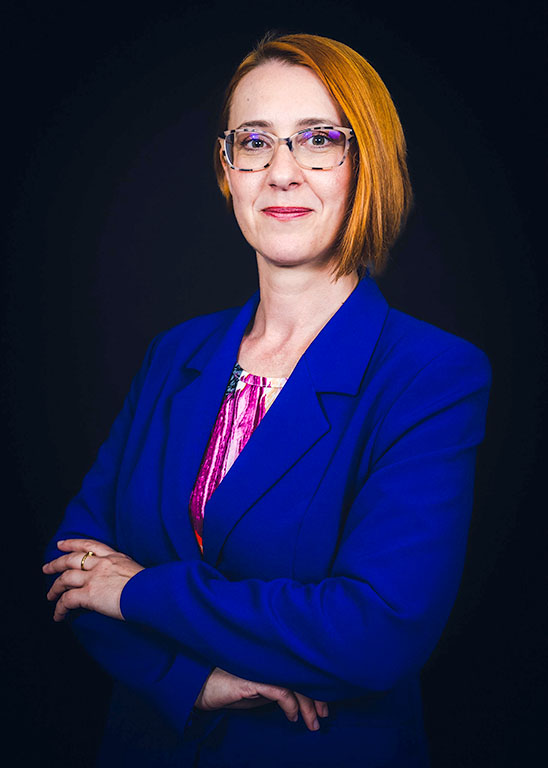
Currently, the head of the Department of Social Pharmacy and Pharmaceutical Legislation is Prof. Ph.D. Alisa Elezović, and the employees are prof. Ph.D. Fahir Bečić, prof. Ph.D. Almir Badnjević, prof. Ph.D. Tamer Bego and assistant. Ph.D. Alisa Jejna.
At this Department, the specialization program for masters of pharmacy under the name Pharmaceutical informatics and pharmacoeconomics is realized, which are carried out according to the plan and program of the Ministry of Health of the Federation of Bosnia and Herzegovina.
Scientific-teaching and professional staff currently involved in the teaching process
 |
 |
 |
 |
 |
|
Alisa Elezović |
Fahir Bečić |
Almir Badnjević |
Tamer Bego |
Alisa Jejna |
Teaching activities (graduate and postgraduate)
Teaching activites at the Department are carried out at the university campus (Zmaja od Bosne 8) within the premises of the University of Sarajevo-Faculty of Pharmacy. The main teaching activities consist of organizing lectures, practical exercises and seminars, for both obligatory and elective courses.
Subjects belonging to the Department are: Pharmaceutical Informatics (according to the 2022 curriculum, the subject is called Health Informatics), Pharmaceutical Statistics (according to the 2022 curriculum, the subject is called Statistics in Pharmacy), History of Pharmacy, Introduction in pharmacy (according to the 2022 curriculum, the subject is called Introduction to pharmacy and history of pharmacy), Selected chapters from pharmaceutical informatics - Pharmacoeconomics, Selected chapters from health informatics - Biomedical instrumentation, Selected chapters from health informatics - Biomedical signals and systems, Methodology of scientific work, Social pharmacy (according to the curriculum from 2022, the subject is called Social pharmacy and health system), Sociology, Professional practice, Compulsory and optional subjects of specialist studies.
Teachers also contribute to elective courses in postgraduate studies. These include elective courses of the doctoral studies: Statistics and experiment design, Methodology and ethics of scientific research and Application of artificial intelligence in healthcare.
Scientific and professional activities
Within the Department of Social Pharmacy and Pharmaceutical Legislation, contemporary pharmaceutical subjects are studied, involving the application of informatics models in pharmacy as well as general and applied statistics. Pharmacists have the opportunity to attend a specialization program in pharmaceutical informatics and pharmacoeconomics, implemented according to the program of the Ministry of Health of the Federation of Bosnia and Herzegovina.
The subject Pharmaceutical Informatics (Health Informatics) aims to develop, design, and organize information systems in pharmacy, utilizing scientific knowledge and acquired experience. Through this course, students gain knowledge of information systems in healthcare, basics of computer science, and bibliographic databases. Upon completion, students are qualified to professionally search databases and work on pharmaceutical information systems, enabling them to properly seek and utilize the latest pharmacy information and adequately inform patients using acquired communication skills. Additionally, students are trained in independent writing, searching, and understanding of computer science.
As an elective subject, students can choose Pharmacoeconomics, which aims to provide knowledge of basic cost concepts and measurement of therapeutic outcomes to minimize costs. During the course, students are introduced to basic modeling concepts and skills in using pharmacoeconomic methods. This discipline transforms scientific knowledge and experience into tools for controlling costs and health outcomes related to drugs. Pharmacoeconomics facilitates decision-making on drug financing, which is of high interest to health insurance funds, the pharmaceutical industry, drug development, post-market analyses, and treatment planning.
Associate Professor Almir Badnjević is the author of numerous scientific papers in the field of biomedical engineering, medical devices, and the implementation of ISO standards in medical laboratories and inspection bodies, thus his expert perspective on these topics contributes to a better understanding by students. Correct understanding of topics is crucial for safe and efficient healthcare services.